


Bangkok – Daikin Industries (Thailand) Ltd. (“Daikin”) reaffirmed its commitment to developing highly energy-efficient and environmentally friendly air-conditioning technologies as one of the leading companies participating in the Energy Efficiency Label No. 5 program for Variable Refrigerant Flow (VRF) air-conditioning systems, in collaboration with the Electricity Generating Authority of Thailand (EGAT).
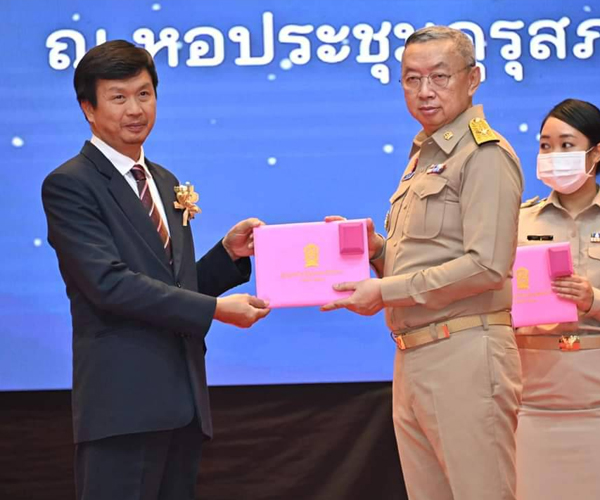
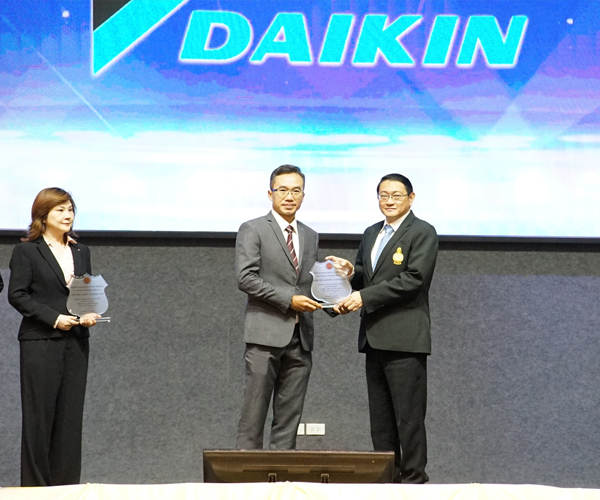
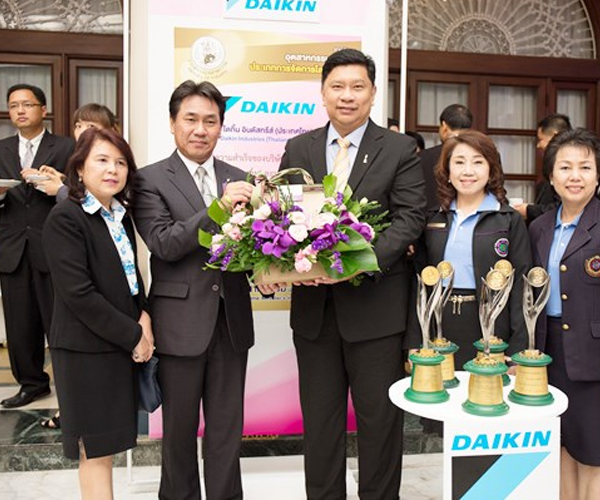
Daikin received a plaque of appreciation from Mr. Akanat Promphan, Minister of Energy, in recognition of its participation and support for the program. The company also received a plaque of appreciation and a declaration of intent certificate for the Energy Conservation Network (Energy Beyond Standards), reflecting its commitment to promoting energy conservation and efficient energy use. Mr. Tsutomu Kurihara, President of Daikin Industries (Thailand) Ltd., represented the company in receiving the plaques and declaration of intent certificate.
The Energy Efficiency Label No. 5 program for VRF air-conditioning systems is one of EGAT’s initiatives to promote the use of highly energy-efficient air-conditioning systems. In 2026, the certification scope was expanded to cover VRF air-conditioning systems with cooling capacities ranging from 100,001 to 200,000 BTU/h, with the Energy Efficiency Label No. 5 displayed on qualified products from 1 August 2026 onward.
As a participating company, Daikin exchanged technology-related information and expertise in VRF air-conditioning systems to EGAT to support the development of the program’s efficiency criteria. Daikin also submitted its VRV air-conditioning products for testing and certification under the Energy Efficiency Label No. 5 program. To date, 10 Daikin VRV models with cooling capacities ranging from 100,001 to 200,000 BTU/h have met the certification criteria, including the VRV6A and VRV6X models.
The development of these products is driven by the combined expertise of Daikin in product design and research and development, and manufacturing. Thailand serves as one of Daikin’s key manufacturing bases, with products manufactured locally also exported to international markets. The Energy Efficiency Label No. 5 certification therefore represents another testament to the performance standards and energy-efficient technologies of Daikin products.
Mr. Kurihara said that Daikin’s development of air-conditioning technologies goes beyond improving product efficiency, with a strong focus on creating long-term value for customers, society and the environment, particularly through solutions that enable businesses to manage energy more efficiently.
“Daikin believes that true leadership is built not by technology alone, but through continuous improvement and the sustainable delivery of trusted value. Our participation in the Energy Efficiency Label No. 5 program marks another important step in leveraging our technological expertise and innovation to contribute to improving the energy efficiency of air-conditioning systems in Thailand.”
Furthermore, Daikin’s participation in the program is aligned with its environmental approach, which places strong emphasis on improving energy efficiency, developing technologies that help reduce environmental impacts, and reducing carbon dioxide emissions. These efforts form part of Daikin’s commitment to helping drive society toward clean energy use and carbon neutrality.
Daikin expects that the Energy Efficiency Label No. 5 certification will serve as another factor in building customer confidence in choosing Daikin VRV air-conditioning products. The company will continue to expand its role as an “Air Solution Provider,” offering comprehensive consultation and solutions tailored to the needs of customers across various segments, including building owners, consultants and residential customers. Daikin aims to support customers throughout the entire process, from product selection and system design to enhancing energy efficiency and air-conditioning system standards for long-term sustainability.
 231
 231
 231
 231

 231
 231